
Learning the documents required for Canada tourist visa applications is the single most important step in your application process. Planning a dream trip to Canada’s Rocky Mountains, Niagara Falls, or vibrant cities like Toronto and Vancouver starts with understanding what the visa officer expects to see in your file.
A Canada tourist visa is officially called a Visitor Visa or Temporary Resident Visa. It allows foreign nationals to visit Canada for tourism and family visits. Many refusals occur because applicants submit weak or incomplete documents, especially with regard to their document translations.
In this in-depth 2026 guide, we review:
- Step-by-step application procedures
- Guidelines for family applications
- Common reasons for visa refusal
- Documents required for a tourist visa in Canada
- Translation requirements for a successful application
All information is aligned with the official IRCC guidelines and written to help you apply with confidence. So, keep on reading to get a head start in your application!
Important note: If you’d like to cut to the chase and get IRCC-certified translations of your documents today, don’t hesitate to explore our solutions.
What Is a Canada Tourist Visa?
A Canada tourist visa is an official document that confirms you meet the requirements to enter Canada temporarily. Once approved, most visitors receive a multiple-entry visa, allowing for repeated travel over a period of up to 10 years.
A typical stay is limited to six months, though the officer at the port of entry may authorize a different period. Additionally, it’s important to note that the visa itself does not guarantee entry, as the final decision is always made by a border officer upon your arrival.
As the name suggests, a visitor visa is specifically for visitors and does not permit you to work or study long-term in Canada. It is also distinct from an Electronic Travel Authorization (eTA), which is only for citizens from visa-exempt countries flying to Canada.
To apply, you will need to gather the specific documents required for a Canada tourist visa, including proof of funds and your travel itinerary, alongside certified translations of your documents. Ensuring you have all the required documents for a Canada tourist visa will help make your application process smoother.
Who Can Apply for a Canada Tourist Visa? Eligibility Requirements
Applying for a Canada tourist visa, you should first gather the necessary documents, meet IRCC’s translation requirements, and pass the eligibility rules. These requirements apply to all applicants, regardless of their country of origin.
To make sure you’re eligible, you need to check the following documents:
- A valid passport or travel document
- Medical documents reflecting that you’re in good health
- Criminal record showing no serious criminal or immigration violations
- Proof of strong ties to your home country
- Proof that you will leave Canada at the end of your visit
- Your transaction history, reflecting that you have enough money for your stay and return trip
Note that visa officers focus heavily on your intent to return home. They assess factors like your job, family situation, financial stability, and travel history to confirm your temporary intent. In fact, having weak ties to the home country remains one of the most common reasons for visa refusals.
Certain applicants, such as minors or those with a previous visa refusal, may face additional scrutiny. Meanwhile, parents and grandparents should check if they qualify for a Super Visa instead of a regular visitor visa. A Super Visa allows parents and grandparents to visit their children or grandchildren in Canada for up to 5 years at a time.
Documents Required for Canada Tourist Visa
The documents required for tourist visa Canada applications depend on your profile. The categories below apply to most applicants; make sure to read through the requirements and prepare every item:
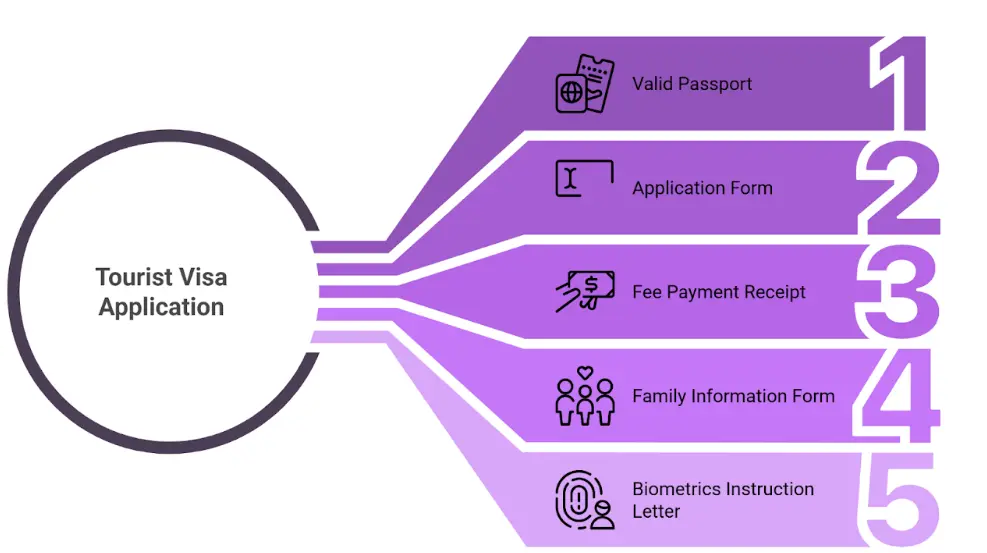
Mandatory Documents Required for Tourist Visa Canada – Main Applicant
For the main applicant, the following documents are needed:
- A valid passport, including copies of the bio page and all stamped or visa pages
- A completed Application for Temporary Resident Visa form (IMM 5257), submitted online
- A receipt confirming payment of the application fee
- A completed Family Information Form (IMM 5707 or IMM 5645) for all applicants aged 18 or older
- A biometrics instruction letter and proof of submission, if applicable
Please note that your passport should ideally be valid for at least six months beyond your planned stay. Also, bear in mind that for all your documents, you need certified translation and notarization services to ensure they are accepted by Canadian institutions.
Supporting Tourist Visa Documents Required for Canada – Main Applicant
Apart from the mandatory documents mentioned above, the following items carry significant weight in approval decisions.
- Proof of Purpose of Travel
You will need to submit a travel itinerary that outlines your planned dates and locations, which can be supported by hotel bookings or accommodation details. If you are visiting family or friends, it is also helpful to include an invitation letter from your host. A brief explanation letter describing your trip can further clarify your plans, and while flight tickets are not mandatory, refundable or tentative bookings are perfectly acceptable for this purpose.
- Proof of Funds
To demonstrate your financial capacity, you should provide bank statements for the past six months along with an employment letter stating your salary and position. Recent pay slips or tax returns can also serve as strong evidence of your income.
If someone else is funding your trip, you will need to include their financial documents as well. Keep in mind that there is no fixed amount required, but your funds must clearly be sufficient to cover your stay and return travel.
To remove the risk of application rejections, make sure you have a properly certified translation of your financial documents.
- Proof of Ties to Your Home Country
You can establish your ties by including an employment letter with an approved leave and return date, or business registration documents if you are self-employed. Other strong evidence includes proof of family members staying behind, ongoing studies, or assets such as property and long-term investments. These documents help show that you have strong reasons to return home after your visit.
- Travel History
When demonstrating your travel history, you should submit copies of previous visas and entry stamps or provide old passports that show your past international travel. A positive travel history can strengthen your application by demonstrating that you have followed visa rules in other countries and complied with previous entry requirements.
It is important to note that all documents, whether mandatory or complementary, must be translated into English. To avoid common translation mistakes that put your entire application at risk, make sure to partner with a trusted translation agency.
Documents Required for Canada Tourist Visa – Partners
Each family member who needs a visa must submit a separate application, though you can link these applications online and pay all fees together. Beyond the standard documents required for a Canada tourist visa, families should prepare additional paperwork to support their group application.
As you build your family application, remember that each applicant must still demonstrate their own ties to their home country. If one person is sponsoring the entire family, you should include a detailed sponsor letter and full financial evidence. This sponsor package is one of the key required documents for a Canada tourist visa that officers will review carefully.
To establish your family connections, you should include a marriage certificate for spouses. If you are in a common-law relationship, the Statutory Declaration of Common-Law Union (IMM 5409) is required. You may also strengthen your application with supporting proof, such as joint bank accounts or shared leases.
Documents Required for Tourist Visa Canada – Minor Children
When travelling with children, specific rules apply. You will need birth certificates, a consent letter from any non-accompanying parent, along with copies of both parents’ passports. If relevant to your situation, custody or adoption documents should also be submitted.
In most cases, notarization or apostille of birth certificates and personal documents is also required. So, finding accredited individuals who can apostille a document in Canada becomes an important step in the process.
Canada Visa for Tourists Required Documents – Super Visa for Parents & Grandparents
Families with older members, like parents and grandparents, may want to consider the Super Visa instead. This option allows longer stays but requires translation of private medical documents approved by IRCC.
The specific Canada visa for tourists’ required documents can vary by situation, so taking the time to organize everything properly will help your family’s application move forward smoothly.
How to Apply for a Canada Tourist Visa: Quick Overview
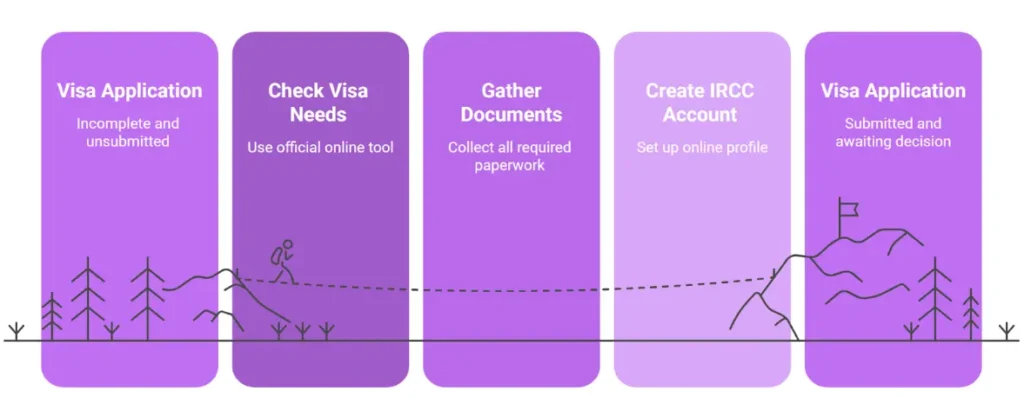
Most applicants must apply online through their IRCC account, as paper applications are accepted only in limited situations. The general steps of applying for a Canadian Visitor Visa are as follows:
- Check if you need a visa using IRCC’s official tool
- Gather all required documents and their translations by a regular or certified translation, as needed
- Create an online IRCC account
- Complete the application form IMM 5257
- Pay the required fees
- Give biometrics if required
- Submit your application and wait for a decision
When you are ready to pay, the standard visitor visa fee for 2026 is CAD 100 per person. Biometrics costs an additional CAD 85 per person or CAD 170 for a family applying together. After submission, keep in mind that processing times vary by country and current application volume.
Certified Translation of Documents Required for Canada Tourist Visa
The more you delve into the requirements, the clearer it becomes that getting certified translations plays a critical role in the success or failure of your application. Without certified translations of your personal, academic, financial, or business documents, your visa application could be delayed or rejected.
At Certified Translations Canada, we have invested years of experience and a large network of qualified translators, interpreters, and accredited officers to ensure all documents are ready for official use! We offer:
- Certified translations of all document types of over 150 languages,
- On-site, remote, or over-the-phone interpretation services,
- Apostille and public notary services.
With same-day solutions available for urgent cases, our team ensures your documents are translated, certified, notarized, and apostilled within your timeline and based on your unique needs!
Submit your request today and enjoy a fast, reliable, confidential experience.
Common Refusal Reasons and How to Avoid Them
Despite their best efforts, many applicants face refusals when applying for the Canada visitor visa. While everyone’s case is different, there are common reasons why an application might get refused. Learning about these reasons can help you avoid mistakes and increase your chances of success from the get-go.
- Insufficient Proof of Funds
The bank statements or financial documents submitted did not show enough money to cover the stay and return travel. Officers need to see that an applicant can support themselves without working in Canada.
- Weak Ties to Home Country
The officer was not convinced the applicant had strong reasons to return home, such as a job, family, or property. Without these ties, there may be concerns that the applicant will overstay their visa.
- Unclear Travel Purpose
The itinerary or explanation letter did not clearly explain why the applicant wants to visit Canada. Vague plans make it harder for officers to approve an application.
- Inconsistent Information
Details in the application forms did not match across different documents. Even small mistakes can raise concerns about the applicant’s honesty.
- Poor-Quality Translations
Documents translated poorly or by uncertified sources can create confusion for visa officers. Certified translations for immigration ensure all stamps, dates, or names match the original documents. To strengthen your application, work with a trusted translation agency, such as Certified Translations Canada, and leave your translations to an experienced team.
Practical Tips for a Strong Application
Applying for a Canada tourist visa requires attention to detail at every stage. To improve your chances of approval, follow these practical tips when preparing your application:
1- Apply at Least Two to Three Months Early
Processing times vary by country and can change with application volumes. Applying early gives you a buffer in case of delays or requests for additional information.
2- Be Consistent Across All Documents
The information in your forms should match your supporting documents exactly. Small discrepancies in dates, names, or employment details can raise concerns about your application.
3- Upload Clear, Readable Scans
Blurry or cropped documents are difficult for officers to review and may be returned. Take time to scan each page clearly so all text and stamps are visible.
4- Translate Documents Properly and Early
A requirement is to have every document not in English or French translated by a certified translator. Using a recognized professional, such as a member of ATIO or STIBC, ensures your translations meet official standards and are accepted by visa officers.
5- Seek Professional Help if Your Case Is Complex
Applicants with previous refusals, criminal history, or complicated family situations may benefit from expert guidance. A regulated consultant or lawyer can help you navigate these challenges.
Proper preparation of the documents required for Canada tourist visa applications makes a real difference. When you take the time to organize everything carefully, you present yourself as a credible and well-prepared applicant.
Conclusion
As you prepare your Canadian visitor visa application, remember that every document tells part of your story to the visa officer. In this article, we covered the essential documents required for Canada tourist visa applications, from proof of funds to travel history and family ties.
Please note that the tourist visa documents required for Canada must be translated by certified experts accepted by IRCC and other Canadian authorities. At Certified Translation Canada, we specialize in preparing translation packages that meet these strict standards. Our translators are recognized by IRCC and provide certified translations you can trust.
So, if you need to translate your documents required for a tourist visa in Canada, don’t hesitate to explore our certified translation and notary services.
FAQ on Documents Required for Canada Tourist Visa
Navigating the application process often raises questions about the specific documents required for Canada tourist visa applications. Below you will find answers to the most common questions travellers have when preparing their paperwork.
1- What Documents Do We Need for a Canada Visitor Visa?
You need a valid passport, completed application forms, proof of funds, travel itinerary, proof of ties to your home country, and biometrics. Family members require additional documents, like marriage or birth certificates, to prove their relationship.
2- What Is the New Rule of Visitor Visa in Canada?
There is no single new rule, but Canada continuously updates its processing and requirements. Always check the official IRCC website for the latest information on application forms, fees, and biometrics instructions before you apply.
3- How Much Money Is Needed for a Tourist Visa in Canada?
There is no fixed amount set by immigration authorities. Your funds must reasonably cover the full cost of your travel, accommodation, and daily expenses for the entire duration of your planned stay.
4- How Many Years of Visa Does Canada Give for a Tourist Visa?
Most approved applicants receive a multiple-entry visa valid for up to 10 years or until their passport expires. This allows for repeated travel to Canada without needing to reapply each time.
5- How Long Does It Take to Get a Visitor Visa for Canada?
Processing times vary widely by country and application volume. They can range from a few weeks to several months, so checking the current IRCC processing times for your specific country is recommended.
6- What Do I Need to Go to Canada as a Tourist?
You need an approved visitor visa or an eTA, depending on your nationality. You must also carry your passport, proof of funds, and details about your accommodation and travel plans when you arrive.
7- How to Extend Your Canada Visitor Stay?
When you are already in Canada and wish to stay longer, you do not extend your actual visa. Instead, you must apply for a Visitor Record, which is a separate document that authorizes you to extend your stay. To maintain legal status, you must submit this application at least 30 days before your current status expires, and the entire process is completed online, using the form IMM 5708.
The specific documents required for a Canada tourist visa extension are similar to your initial application. These documents typically include:
– Copy of your passport
– Explanation letter for the extension request
– Updated proof of funds
– Updated proof of ties
– New travel or accommodation plans
The application fee is CAD 100 per person, which aligns with the standard tourist visa fee structure. Processing times for extensions can sometimes exceed 200 days, so applying early is critical to maintaining your status.
If your application is approved, you will receive a Visitor Record by mail. If it is refused, you must leave Canada immediately after your original visa expires. Gathering all tourist visa documents required for Canada before you apply will help prevent unnecessary delays or refusals.